Sirocco Industrial
Ultra-High Pressure Water Jetting in Darwin
The environmentally responsible solution. Servicing the Northern Territory and Australia.
Surface Preparation
State-Of-The-Art Water Jetting Equipment
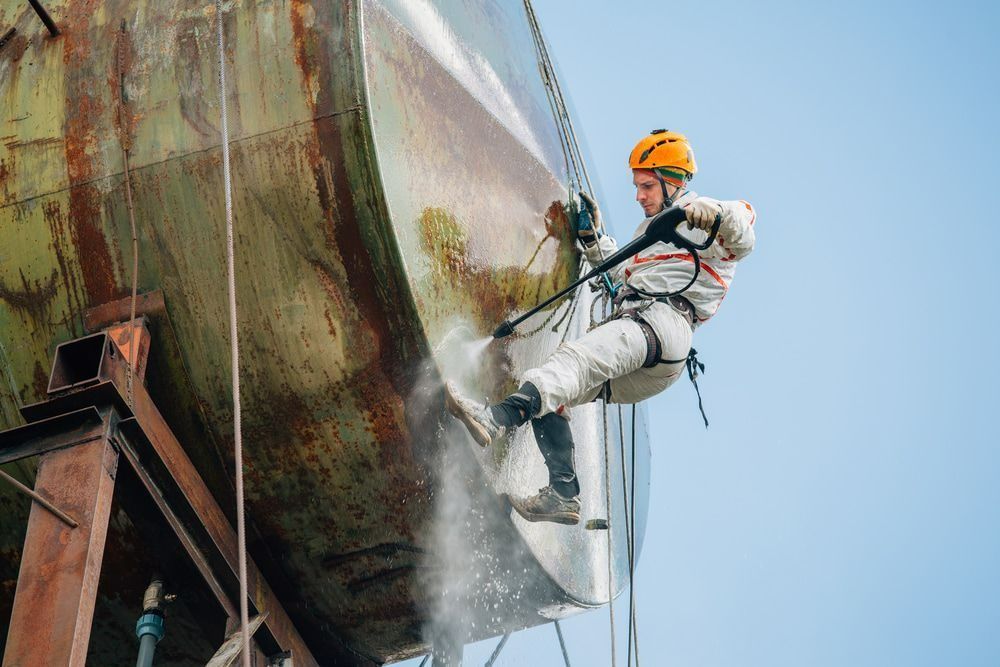
Sirocco Industrial provides professional ultra-high pressure (UHP) water jetting services throughout the Northern Territory and beyond. Using advanced water blasting equipment, we safely and effectively remove coatings, rust, scale, paint and other contaminants from a wide range of industrial surfaces without causing unnecessary damage to the underlying material.
Projects of all sizes, from industrial plants and tanks to marine vessels, structural steel, and heavy machinery. Ultra-high pressure water jetting is an efficient surface preparation method that leaves surfaces clean and ready for inspection, maintenance or the application of protective coatings.
It delivers safe, reliable and high-quality water jetting solutions tailored to your project. Compared with traditional cleaning methods such as chemical stripping, solvent cleaning or mechanical sanding, UHP water jetting offers a cleaner, more environmentally responsible solution. It minimises waste, reduces the use of hazardous chemicals and provides precise cleaning for even the most demanding industrial applications.
Contact our team today on
08 8932 6566 to discuss ultra-high-pressure water jetting requirements.
Built for Heavy Industry
A Cost-Effective & Environmentally Responsible Solution
Ultra-high pressure (UHP) water jetting is a highly efficient and cost-effective method of surface preparation and industrial cleaning. In many instances, it reduces the need for abrasive blasting media, lowering material handling, cleanup and waste disposal costs while streamlining project timelines.
Because UHP water jetting uses only pressurised water, it produces significantly less waste than many traditional surface preparation methods and avoids the use of harsh chemicals or abrasive materials. This makes it an environmentally responsible solution for removing coatings, rust, scale and other contaminants while helping to minimise environmental impact and simplify site cleanup.
UHP water jetting is also well suited to lead paint removal and remediation projects. By suppressing airborne dust during coating removal, it helps reduce the risk of lead contamination and supports safer working conditions when used alongside appropriate containment and waste management practices.
The precision of ultra-high-pressure water jetting makes it ideal for cleaning around sensitive equipment, intricate components and machinery with moving parts. It effectively removes unwanted coatings and contaminants while minimising the risk of damage to the underlying substrate.
Whether your project involves industrial facilities, marine assets, structural steel, or heavy equipment, Sirocco Industrial delivers safe, efficient and reliable UHP water jetting solutions throughout the Northern Territory and across Australia.
Thank you for contacting Sirocco Industrial.
We will get back to you as soon as possible.
Oops, there was an error sending your message.
Please try again later.
What is abrasive blasting used for?
Abrasive blasting is used to remove rust, corrosion, paint, scale and surface contaminants from materials such as steel, metal and other industrial substrates. It is commonly performed as a surface preparation method before applying industrial coatings, protective finishes or corrosion prevention systems.
In heavy industry, abrasive blasting is especially important because it creates a clean, textured surface that coatings can properly bond to. Without proper preparation, coatings may peel, blister or fail prematurely, which can lead to costly repairs and downtime. Abrasive blasting is also used for restoration work, removing old coatings from machinery, vehicles and structural steel, and preparing surfaces for inspection, repairs or re-coating.
Depending on the abrasive media used, blasting can be tailored for everything from aggressive rust removal to more controlled surface cleaning.
What’s the difference between sandblasting and abrasive blasting?
Sandblasting is a type of abrasive blasting, but the term abrasive blasting is broader and more accurate today. Traditionally, sandblasting referred to blasting using sand as the abrasive material. However, due to health and safety concerns associated with silica dust, sand is less commonly used in modern industrial environments.
Abrasive blasting can involve many different media such as crushed glass, steel grit, garnet and other engineered abrasives. Each abrasive has different cutting strength, surface profile results and suitability depending on the job.
In industrial settings, abrasive blasting is typically preferred because it allows better control over the finish and is more compatible with modern corrosion prevention systems. The choice of abrasive material can also affect how well protective coatings adhere and how long they last.
How does abrasive blasting help with corrosion prevention?
Abrasive blasting plays a major role in corrosion prevention because it removes the surface rust and corrosion that can weaken metal over time. More importantly, it prepares the surface for protective coatings by creating a clean profile, which helps primers and topcoats bond properly.
When corrosion is left untreated, it can spread beneath coatings, causing them to lift or break down. Abrasive blasting removes those compromised layers and exposes a stable surface, giving protective coatings the best possible foundation.
In industries such as oil, gas, marine and mining, this process is often the first step in long-term asset protection. A properly blasted and coated surface can withstand harsh weather, salt exposure, chemical contact and heavy wear far better than an untreated surface.
Need Help?
Frequently Asked Questions
What is ultra-high pressure water jetting used for?
Ultra-high pressure water jetting is used to remove rust, scale, old coatings, chemical residue, grease and other contaminants from industrial surfaces. It is commonly applied in sectors such as oil and gas, mining, marine and heavy manufacturing where equipment and structures are exposed to harsh operating conditions.
The process uses highly pressurised water to clean and prepare surfaces without the need for abrasive media. This makes it suitable for preparing steel before recoating, cleaning storage tanks and pipelines, and restoring heavily contaminated assets. It is also used when a clean, residue-free surface is required prior to inspection or protective coating application.
Is ultra-high pressure water jetting better than abrasive blasting?
The answer depends on the project requirements, substrate condition and coating system being applied. Ultra-high pressure water jetting is effective for removing contaminants and deteriorated coatings while reducing secondary waste and airborne dust. It is often preferred in environments where abrasive containment is challenging or where minimal surface contamination is critical.
Abrasive blasting, on the other hand, can create a specific surface profile required for certain coating systems. In many industrial projects, both methods are used strategically depending on the asset and performance requirements. A professional assessment of the surface and end-use goals helps determine the most suitable preparation method.
How does ultra-high pressure water jetting prevent corrosion?
Corrosion often begins when moisture, salt or chemicals remain trapped beneath coatings or within surface imperfections. Ultra-high pressure water jetting removes existing rust, loose coatings and contaminants, exposing a clean substrate ready for inspection and recoating.
By properly preparing the surface before applying primers or protective coatings, the risk of premature coating failure is reduced. Effective preparation ensures better adhesion and longer-lasting corrosion protection, particularly in coastal or high-humidity environments where assets are under constant stress.
Send Us a Message
Thank you for contacting Sirocco Industrial.
We will get back to you as soon as possible.
Oops, there was an error sending your message.
Please try again later.


